
This make ahead turkey gravy is rich, smooth and ready up to 3 days before the big dinner. You roast a few turkey wings with onion, carrot and celery, simmer them into a quick homemade stock, then thicken it with a butter and flour roux. No drippings needed. On Thanksgiving, you just warm it up and whisk in a few spoonfuls of drippings from the roast turkey if you have them. The recipe makes about 6 cups, enough for 12 people.
Jump to RecipeGravy is the last thing on the holiday table, and it always seems to happen at the worst moment. The turkey is resting, the potatoes need mashing, and somebody is asking where the serving spoons went. Making the gravy days ahead takes it off that list. When dinner time comes, it is already done and it tastes like you fussed over it.
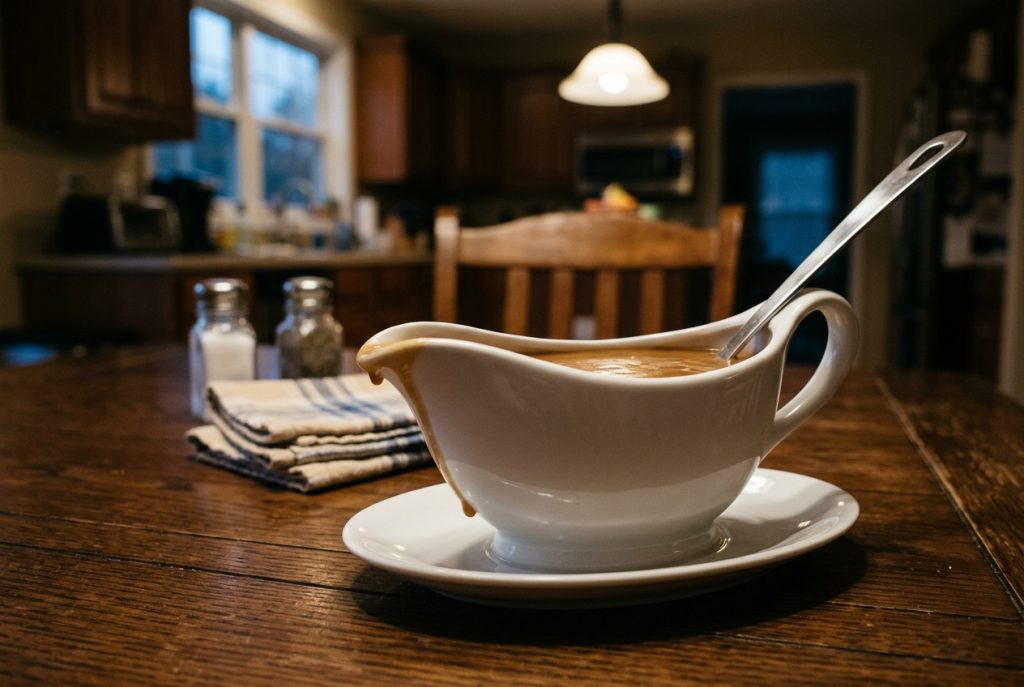
Why This Make Ahead Turkey Gravy Works
- It does not need drippings. Roasted turkey wings give you deep, meaty turkey flavor days before the bird goes in the oven.
- It frees up the stove. On the day of the meal, the gravy only needs a pot and a whisk for about 10 minutes.
- It is smooth every time. A cooked roux thickens the gravy evenly, so you are not fighting lumps while everyone waits.
- It tastes better the next day. A night in the fridge gives the flavors time to settle in.
- It still uses your drippings. Whisk in the good stuff from the roasting pan at the end for a just-made taste.
Ingredients and Easy Swaps
The full amounts are in the recipe card below. Here is what each one does and what you can use instead.
- Turkey wings. About 3 pounds, which is usually 3 or 4 wings. They have lots of skin and bone, so they make a full-flavored stock. Turkey drumsticks or necks work too. Look for them near the whole turkeys in November.
- Onion, carrots and celery. These roast with the wings and add a sweet, savory base. No need to peel the onion. The skin adds a nice brown color.
- Olive oil. Just a spoonful to help the wings and vegetables brown. Any neutral oil is fine.
- Low-sodium chicken broth. Eight cups. Low sodium matters here, because the broth cooks down and gets saltier. Turkey broth is even better if you can find it.
- Thyme and a bay leaf. Fresh thyme sprigs are best. Use 1/2 teaspoon of dried thyme if that is what you have.
- Butter and flour. These make the roux that thickens the gravy. For a gluten-free gravy, skip the roux and thicken with a cornstarch slurry instead (see the variations below).
- Salt and pepper. Add salt at the end, after the gravy has thickened. That way it does not end up too salty.
Make Ahead Turkey Gravy at a Glance
Here is the whole plan in four steps. You can do it all in one afternoon, or split it over two days.
- Roast. Roast the wings and vegetables at 425°F for 60 to 75 minutes, until deep golden brown.
- Simmer. Move everything to a big pot with the broth and herbs. Simmer for about 1 1/2 hours.
- Strain. Strain the stock. You should have about 6 cups.
- Thicken. Cook butter and flour into a roux, whisk in the stock and simmer until thick. Cool it and chill it.
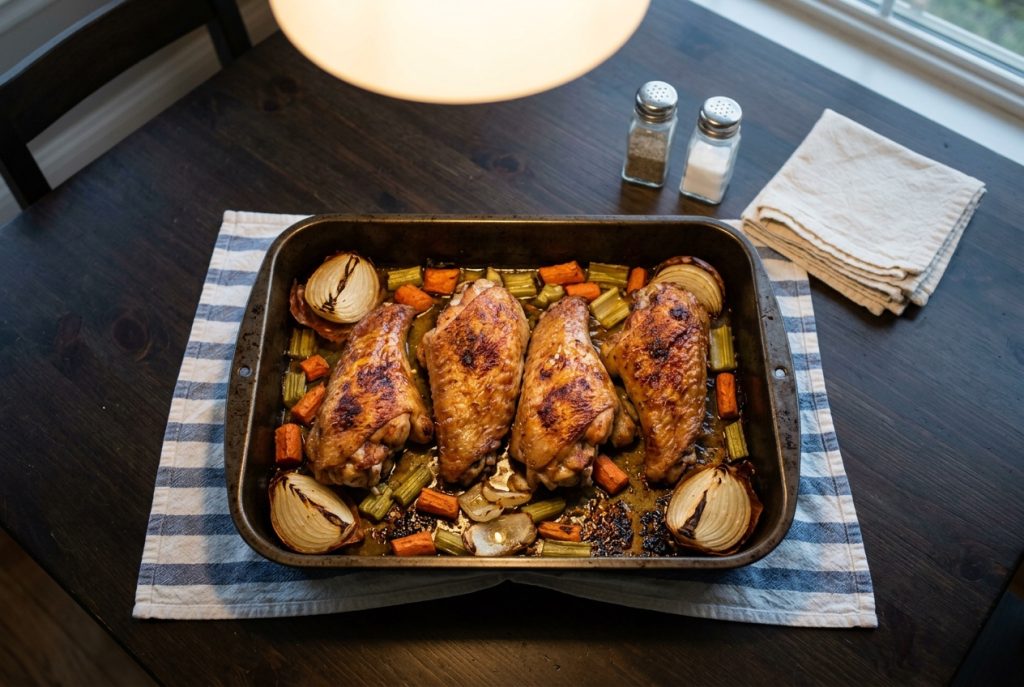
The Key Step: Brown the Wings Well
Color is flavor in gravy. Pale wings make pale, weak gravy. Roast them until the skin is a deep golden brown and the edges of the onion look a little charred. If they still look light after an hour, give them 15 more minutes.
Do not skip the roasting pan, either. After you move the wings to the pot, pour 1 cup of hot water into the pan and scrape up every brown bit with a spatula. Those bits are packed with flavor. Pour the water and the bits right into the pot.
How to Get Smooth Gravy Without Lumps
- Cook the roux first. Melt the butter, whisk in the flour, and stir it over medium heat for 3 to 4 minutes. It should smell nutty and turn the color of peanut butter.
- Add the stock slowly. Pour in about 1 cup of hot stock and whisk hard until it is smooth and thick. Then add the rest a little at a time.
- Use hot stock. Warm stock blends into the roux more easily than cold stock.
- Give it time. Simmer for 8 to 10 minutes. The flour needs that time to thicken all the way and lose its raw taste.
Common Mistakes and How to Fix Them
- Lumpy gravy. The stock went in too fast. Whisk hard for a minute. If lumps stay, pour the gravy through a fine-mesh strainer.
- Thin gravy. Let it simmer a few minutes longer. Still thin? Stir 1 tablespoon of cornstarch into 2 tablespoons of cold water and whisk it into the simmering gravy.
- Thick gravy. Gravy gets thicker as it cools and thickens a lot in the fridge. That is normal. Whisk in warm broth, a few tablespoons at a time, as you reheat it.
- Greasy gravy. The stock had too much fat on top. Chill the stock and lift off the fat before you make the gravy. Or skim it with a big spoon.
- Bland gravy. Add salt a pinch at a time and taste again. Cold food tastes less salty, so check one more time after you reheat it.
- Too salty. The broth was not low sodium. Whisk in a little water or unsalted broth to bring it back.
How to Store and Reheat Make Ahead Turkey Gravy
Let the gravy cool for about 30 minutes, then pour it into a container with a lid. A skin forms on top as it cools. Press a piece of plastic wrap right on the surface to stop that.
- Fridge. Keep it covered for up to 3 days.
- Freezer. Freeze it in freezer bags or containers for up to 3 months. Lay the bags flat so they thaw faster. Thaw overnight in the fridge.
- Stovetop. Warm the gravy in a saucepan over medium-low heat, whisking often. It will look like jelly at first. That is the gelatin from the turkey wings, and it melts as it warms. Bring it to a gentle simmer.
- Slow cooker. To save stove space, warm the gravy in a small slow cooker on low for about 2 hours. Then switch it to warm. Give it a stir now and then.
If the gravy looks a little split after freezing, whisk it hard while it heats. A splash of warm broth brings it back together.
Adding Drippings on the Big Day
This step is optional, but it is a nice one. When the turkey comes out of the oven, pour the pan drippings into a measuring cup and let the fat rise to the top. Spoon off the fat. Whisk 1/4 to 1/2 cup of the dark juices into your hot gravy and simmer for 2 minutes. Taste it before you add any salt, because drippings can be salty.
No drippings? Maybe you smoked the turkey, or you are serving ham this year. The gravy is still great on its own.
Easy Variations
- Herb gravy. Stir in 1 tablespoon of chopped fresh sage or thyme at the end.
- Mushroom gravy. Brown 8 ounces of sliced mushrooms in the butter before you add the flour.
- Creamy gravy. Whisk in 1/4 cup of heavy cream right before serving.
- Gluten-free gravy. Skip the butter and flour. Bring the 6 cups of stock to a simmer. Stir 6 tablespoons of cornstarch into 1/2 cup of cold water and whisk it in. Simmer for 2 minutes, until thick.
- Giblet gravy. Simmer the neck and giblets from your turkey in the stock. Chop the cooked giblets and stir them in at the end.
What to Serve with Turkey Gravy
Pour it over turkey, of course, along with Stuffing Muffins and our Sweet Potato Casserole with Pecan Topping. Still planning the rest of the meal? Browse our 29 Thanksgiving sides or these Thanksgiving menu ideas.
Got gravy left over? Warm it up as a dip for Turkey and Stuffing Hand Pies, or stir a little into a pot of Crockpot Turkey and Wild Rice Soup for extra body.
Recipe
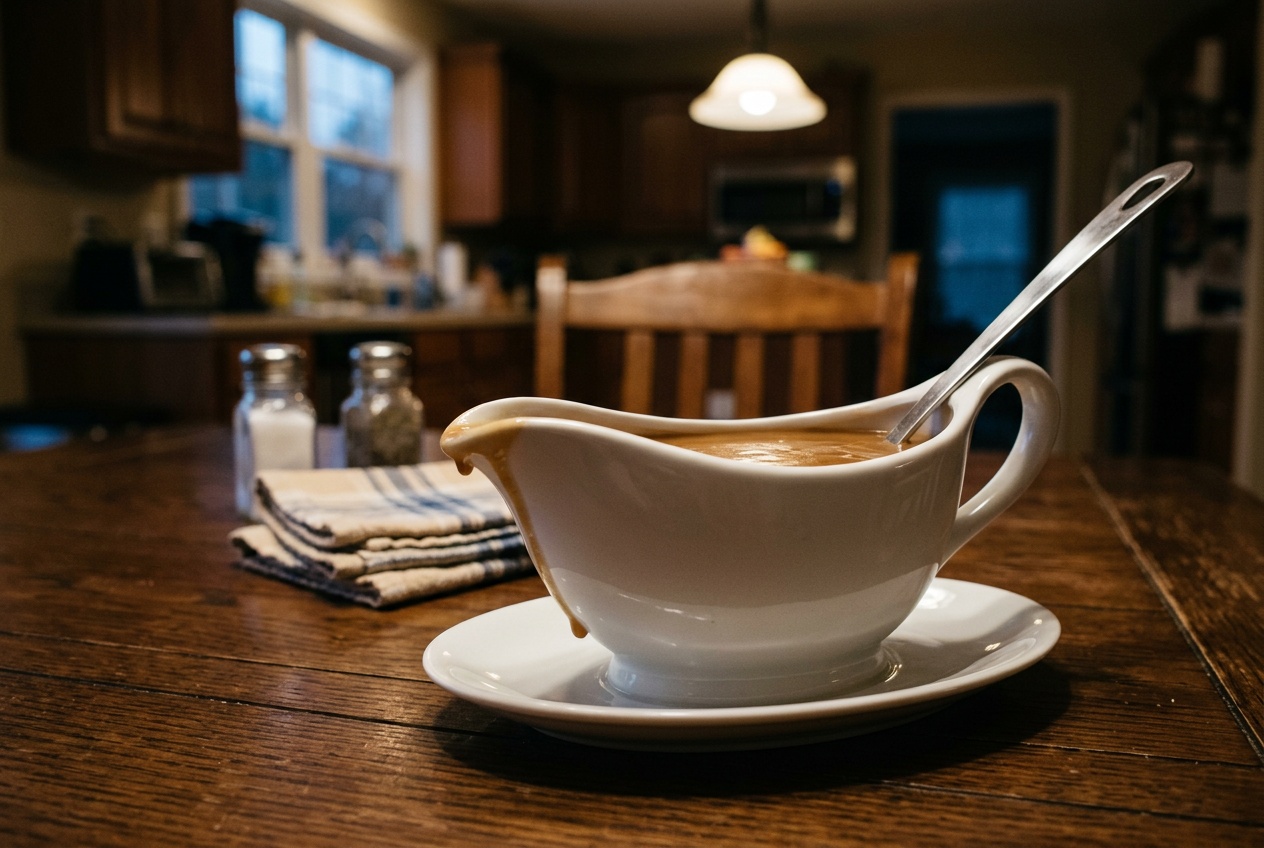

Make Ahead Turkey Gravy
12
servingsKeep the screen of your device on
Ingredients
3 pounds turkey wings (3 or 4 wings), or turkey drumsticks or necks
1 large yellow onion, quartered (skin on)
2 carrots, cut into 2-inch chunks
2 celery ribs, cut into 2-inch chunks
1 tablespoon olive oil
1 cup hot water (for the roasting pan)
8 cups low-sodium chicken broth or turkey broth
4 sprigs fresh thyme (or 1/2 teaspoon dried thyme)
1 bay leaf
1/2 cup unsalted butter (1 stick)
3/4 cup all-purpose flour
1 teaspoon salt, plus more to taste
1/2 teaspoon black pepper
1/4 to 1/2 cup turkey pan drippings, fat skimmed off (optional, on the day)
Directions
- Heat the oven to 425°F. Put the turkey wings, onion, carrots and celery in a roasting pan or on a rimmed sheet pan. Drizzle with the olive oil and toss to coat.
- Roast for 60 to 75 minutes, turning the wings once halfway, until they are deep golden brown and the onion edges are a little charred.
- Move the wings and vegetables to a large stockpot. Pour the hot water into the hot pan and scrape up all the browned bits with a spatula. Pour the water and bits into the pot.
- Add the broth, thyme and bay leaf. Bring to a boil, then turn the heat down to low. Simmer uncovered for about 1 1/2 hours, until the liquid cooks down to about 6 cups.
- Strain the stock through a fine-mesh strainer into a large bowl. Throw out the solids. Skim off the fat on top. If you have less than 6 cups, add broth to make 6 cups.
- Melt the butter in a large saucepan over medium heat. Whisk in the flour and cook, whisking all the time, for 3 to 4 minutes, until it smells nutty and turns light brown.
- Slowly pour in about 1 cup of the hot stock, whisking hard until smooth. Whisk in the rest of the stock a little at a time.
- Bring to a simmer and cook for 8 to 10 minutes, whisking often, until the gravy is thick enough to coat a spoon. Season with the salt and pepper. Taste and add more salt if needed.
- To make ahead, let the gravy cool for 30 minutes. Press plastic wrap onto the surface, cover and refrigerate for up to 3 days, or freeze for up to 3 months.
- To serve, reheat the gravy in a saucepan over medium-low heat, whisking often, until it simmers. Thin it with a little warm broth if needed. Whisk in the skimmed turkey drippings if using and simmer for 2 minutes.
Like this recipe?
Follow @dinnerendeavor on Pinterest
Can you make turkey gravy ahead of time?
Yes. Roast turkey wings to make a quick stock, then thicken it with a butter and flour roux. Cool the gravy, cover it and keep it in the fridge for up to 3 days. Reheat it on the stove and whisk in a little warm broth if it is too thick.
How far ahead can I make turkey gravy?
You can make it up to 3 days ahead and keep it in the fridge. For a longer head start, freeze it for up to 3 months and thaw it overnight in the fridge before you reheat it.
How do you reheat make ahead gravy?
Warm it in a saucepan over medium-low heat, whisking often, until it simmers. It looks like jelly when cold, but it melts as it heats. Thin it with a few tablespoons of warm broth if needed. A slow cooker on low also works and saves stove space.
Can you freeze turkey gravy?
Yes. Freeze it in containers or flat freezer bags for up to 3 months. Thaw it in the fridge overnight. If it looks a little split while it heats, keep whisking and add a splash of warm broth.
How do I make turkey gravy without drippings?
Roast turkey wings with onion, carrot and celery until deep brown, then simmer them in low-sodium broth to make a rich stock. Thicken the stock with a butter and flour roux. You get real turkey flavor without a roasted turkey.
How do I fix lumpy gravy?
Whisk it hard for a minute. If the lumps stay, pour the gravy through a fine-mesh strainer and bring it back to a simmer. Next time, add the hot stock to the roux slowly, about 1 cup at a time.