Stop Guessing! Round vs. Oval Slow Cookers—Which One Wins?

By ·

This website contains affiliate links. As an Amazon Associate, I earn from qualifying purchases.

When you shop for a slow cooker, you will see two main shapes: round and oval. It seems like a small detail, but the shape changes what fits inside, how food cooks, and how much room the cooker takes up in your kitchen.

I use both shapes, and each one has a job it does best. This guide walks through the pros and cons of each, which one fits different cooking styles, and what else to look for so you buy the right slow cooker the first time.

Understanding the Difference Between Round and Oval Slow Cookers

Every slow cooker holds food at a steady, low heat for hours. That is why they are so good for soups, stews, roasts, and shredded meats. The shape of the crock decides what fits well and how the heat reaches the food.

  • Round slow cookers: Usually more compact. They are great for smaller portions, soups, stews, chili, and dips.
  • Oval slow cookers: Longer and wider at the base. They fit large cuts of meat, whole chickens, and dishes that need more surface area.

Most heating elements wrap around the sides of the crock, not just the bottom. In a round pot, the food sits about the same distance from the walls all the way around. In an oval pot, the ends are a little farther from the center, which matters more as the size goes up.

Pros and Cons of Round Slow Cookers
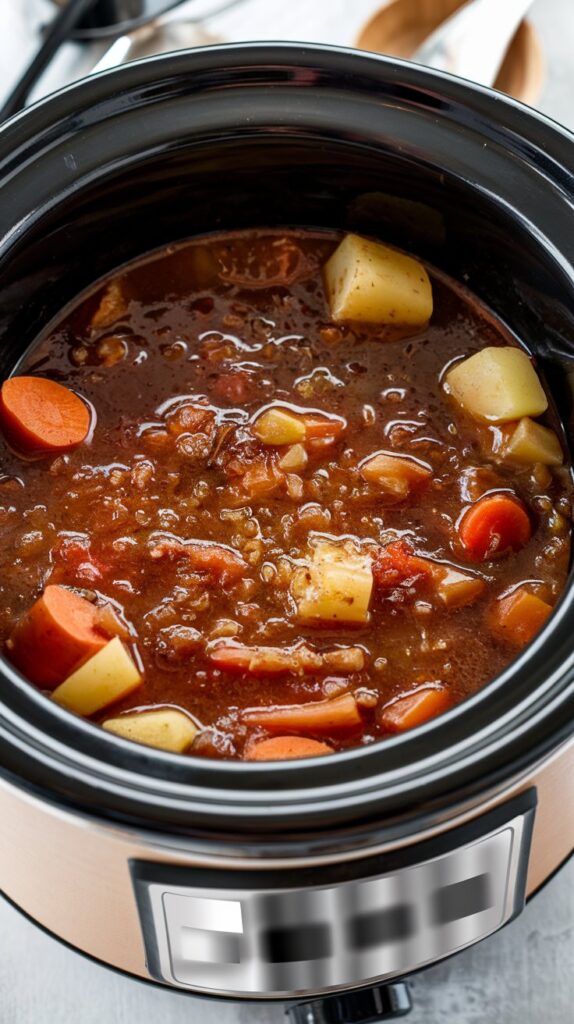
closeup top view of round slow cooker filled with bubbling stew

Pros:

Cons:

  • Limited space for large cuts of meat
  • Long items like ribs or a pork loin may not lie flat

Pros and Cons of Oval Slow Cookers
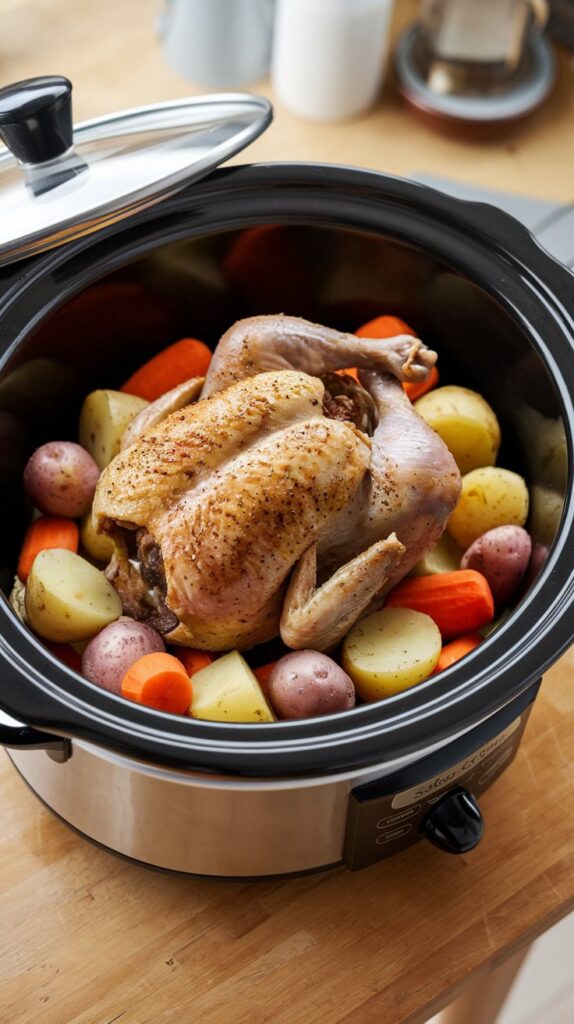
closeup top view of oval slow cooker with chicken cooking and potatoes with carrots

Pros:

  • Best for whole chickens, roasts, and ribs
  • More surface area, so ingredients spread out in a thinner layer
  • Works for a wider range of recipes, including casseroles and lasagna

Cons:

  • Takes up more space on the counter and in the cabinet
  • Some larger models heat a little unevenly at the ends
  • Small batches can spread too thin and cook too fast

Which One Is Best for Your Cooking Style?

a female chef pointing to a round slow cooker filled with creamy chicken soup and oval slow cooker filled a  beef roast

If you are still on the fence, think about what you cook most often:

  • Small households or limited storage: A round slow cooker fits compact kitchens and smaller servings.
  • Large cuts of meat: An oval slow cooker gives you room for roasts, briskets, and whole chickens.
  • General use like stews, soups, and weeknight meals: Both work, but an oval cooker tends to be more flexible.
  • Dips, sauces, and small batches: Round is the better fit. There are even small 1.5 to 2 quart round cookers made just for dips.

If you cook the same recipe in both shapes, you will likely notice two things:

  • Round slow cookers keep liquid deeper and more centered, which helps small portions cook evenly.
  • Oval slow cookers make it easier to layer ingredients, like potatoes and carrots under a roast.

How to Pick the Right Size

Shape matters, but size matters just as much. Slow cookers work best when they are about half to two-thirds full. Too little food can scorch, and too much may not cook through in time.

  • 1.5 to 3 quarts: Dips, sauces, and meals for one or two people.
  • 4 to 5 quarts: Soups, chili, and dinners for three or four.
  • 6 to 7 quarts: Whole chickens, big roasts, and families of five or more. This is the most common size for oval cookers.

Expert Tips for Choosing the Right Shape

  • If you only have room for one, an oval slow cooker is the most versatile choice.
  • If storage is tight and you mostly cook soups, dips, or smaller meals, go with a round slow cooker.
  • Think about shape and size together. A large round slow cooker might still be too narrow for a big roast, while an oversized oval one may not fit in your cabinet.
  • Look for a removable crock that is dishwasher safe and a glass lid so you can check food without lifting it.
  • A programmable model that switches to warm when the time is up is worth the extra few dollars if you are gone all day.

FAQ

Do round and oval slow cookers cook at the same speed?
Mostly, yes. Food spread thin in a wide oval cooker can finish a little sooner, so check early the first time you make a recipe.

Can I use an oval slow cooker for soup?
Yes. Soups, stews, and chili all work fine in an oval cooker.

Which shape is better for a whole chicken?
Oval. A 6 quart oval cooker fits most whole chickens with room for vegetables underneath.


Both round and oval slow cookers have a place in the kitchen. If you mostly make soups and sauces, a round slow cooker might be all you need. If you love cooking big meals or whole cuts of meat, an oval model will likely serve you best.

Think about what you cook most often, check the space you have, and pick the shape and size that fit your routine.


Stop Guessing! Round vs. Oval Slow Cookers—Which One Wins?

When you shop for a slow cooker, you will see two main shapes: round and oval. It seems like a small detail, but the shape changes what fits inside, how food cooks, and how much room the cooker takes up in your kitchen.

I use both shapes, and each one has a job it does best. This guide walks through the pros and cons of each, which one fits different cooking styles, and what else to look for so you buy the right slow cooker the first time.

Understanding the Difference Between Round and Oval Slow Cookers

Every slow cooker holds food at a steady, low heat for hours. That is why they are so good for soups, stews, roasts, and shredded meats. The shape of the crock decides what fits well and how the heat reaches the food.

  • Round slow cookers: Usually more compact. They are great for smaller portions, soups, stews, chili, and dips.
  • Oval slow cookers: Longer and wider at the base. They fit large cuts of meat, whole chickens, and dishes that need more surface area.

Most heating elements wrap around the sides of the crock, not just the bottom. In a round pot, the food sits about the same distance from the walls all the way around. In an oval pot, the ends are a little farther from the center, which matters more as the size goes up.

Pros and Cons of Round Slow Cookers

closeup top view of round slow cooker filled with bubbling stew

Pros:

Cons:

  • Limited space for large cuts of meat
  • Long items like ribs or a pork loin may not lie flat

Pros and Cons of Oval Slow Cookers

closeup top view of oval slow cooker with chicken cooking and potatoes with carrots

Pros:

  • Best for whole chickens, roasts, and ribs
  • More surface area, so ingredients spread out in a thinner layer
  • Works for a wider range of recipes, including casseroles and lasagna

Cons:

  • Takes up more space on the counter and in the cabinet
  • Some larger models heat a little unevenly at the ends
  • Small batches can spread too thin and cook too fast

Which One Is Best for Your Cooking Style?

a female chef pointing to a round slow cooker filled with creamy chicken soup and oval slow cooker filled a  beef roast

If you are still on the fence, think about what you cook most often:

  • Small households or limited storage: A round slow cooker fits compact kitchens and smaller servings.
  • Large cuts of meat: An oval slow cooker gives you room for roasts, briskets, and whole chickens.
  • General use like stews, soups, and weeknight meals: Both work, but an oval cooker tends to be more flexible.
  • Dips, sauces, and small batches: Round is the better fit. There are even small 1.5 to 2 quart round cookers made just for dips.

If you cook the same recipe in both shapes, you will likely notice two things:

  • Round slow cookers keep liquid deeper and more centered, which helps small portions cook evenly.
  • Oval slow cookers make it easier to layer ingredients, like potatoes and carrots under a roast.

How to Pick the Right Size

Shape matters, but size matters just as much. Slow cookers work best when they are about half to two-thirds full. Too little food can scorch, and too much may not cook through in time.

  • 1.5 to 3 quarts: Dips, sauces, and meals for one or two people.
  • 4 to 5 quarts: Soups, chili, and dinners for three or four.
  • 6 to 7 quarts: Whole chickens, big roasts, and families of five or more. This is the most common size for oval cookers.

Expert Tips for Choosing the Right Shape

  • If you only have room for one, an oval slow cooker is the most versatile choice.
  • If storage is tight and you mostly cook soups, dips, or smaller meals, go with a round slow cooker.
  • Think about shape and size together. A large round slow cooker might still be too narrow for a big roast, while an oversized oval one may not fit in your cabinet.
  • Look for a removable crock that is dishwasher safe and a glass lid so you can check food without lifting it.
  • A programmable model that switches to warm when the time is up is worth the extra few dollars if you are gone all day.

FAQ

Do round and oval slow cookers cook at the same speed?
Mostly, yes. Food spread thin in a wide oval cooker can finish a little sooner, so check early the first time you make a recipe.

Can I use an oval slow cooker for soup?
Yes. Soups, stews, and chili all work fine in an oval cooker.

Which shape is better for a whole chicken?
Oval. A 6 quart oval cooker fits most whole chickens with room for vegetables underneath.


Both round and oval slow cookers have a place in the kitchen. If you mostly make soups and sauces, a round slow cooker might be all you need. If you love cooking big meals or whole cuts of meat, an oval model will likely serve you best.

Think about what you cook most often, check the space you have, and pick the shape and size that fit your routine.